 Leap
EcoTray™ — Molded Pulp Trays & Bagasse Fiber
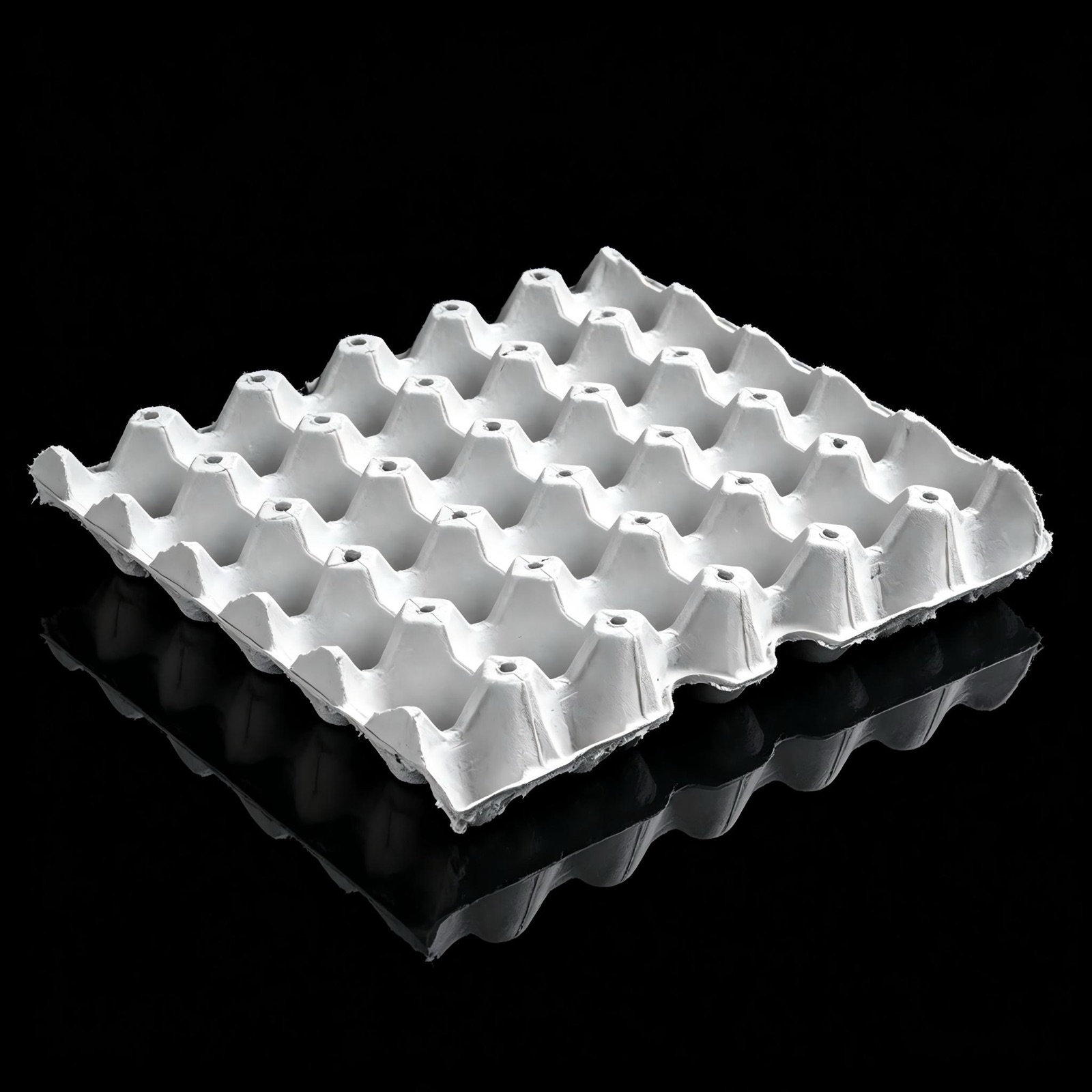
Freezer to Oven to Compost — One Material
Bagasse: sugarcane waste that would otherwise be burned. One material handles −40°C to 220°C — freezer, microwave, and oven-safe in a single container. 95%+ bagasse fiber + aqueous barrier (<5%). No PFAS, no PE lamination, no plastic. Third-party verified non-detect PFAS by ISO 17025 lab. The fastest-growing sustainable packaging segment globally.
Technical Specifications
| Material | 95%+ bagasse fiber + aqueous barrier (<5%) |
| Temperature | −40°C to 220°C |
| Microwave | Yes — no deformation at 1000W/5min |
| Oven | Yes — conventional to 220°C (not broiler) |
| Grease Resistance | 45–60 min with hot fatty food (coated) |
| PFAS | ND (non-detect) — ISO 17025 verified |
| Industrial Compost | ≥90% in 180 days (EN 13432) |
| Home Compost | 6–12 months ambient (OK Compost Home) |
Molded Pulp vs Plastic — When Each Wins
| Factor | Molded Pulp | PET/PP | Edge |
|---|---|---|---|
| Unit Cost | $0.06–0.12 | $0.04–0.08 | Plastic |
| Temp Range | −40°C to 220°C | −20°C to 60°C (PET) | Pulp |
| Microwave | ✅ All formats | ⚠️ PP only | Pulp |
| Oven | ✅ Up to 220°C | ⚠️ CPET (+130% cost) | Pulp |
| Visibility | ❌ Opaque | ✅ 88–92% | Plastic |
| EU PPWR | ✅ Simple | ⚠️ D4R+content | Pulp |
| Eco Perception | ★★★★★ | ★★☆ | Pulp |
What Are Molded Pulp Trays?
Molded pulp trays are food-contact containers formed from recycled paper fiber or sugarcane bagasse — pressed into shape with heat and vacuum, with no plastic lamination and no PFAS coatings. The fiber comes from agricultural residue (bagasse is what remains after sugarcane is pressed) or recycled newsprint and cardboard. Because the material is pressed rather than molded from resin, the finished tray is breathable, cushioning, and compostable at end of life.
For food packers, three properties explain why molded pulp keeps winning shelf space. It absorbs moisture rather than trapping it, which slows softening in berries and produce. It cushions each item in its own cavity, cutting transit bruising. And it carries a straightforward sustainability story — home compostable, renewable fiber, no plastic tax exposure in most markets. That combination is why egg trays have been molded pulp for decades, and why produce trays, berry punnets, and food service containers are following.
Production Methods: Thermoformed, Dry-Press & Wet-Press
Not all molded pulp is the same. The forming method determines surface finish, dimensional precision, and unit cost — and it is the first question to settle when specifying a tray.
Thermoformed (THM)
Formed wet, then pressed hot in a matched die. Produces a smooth, rigid tray with the tightest dimensional tolerance of the three methods — the choice when the tray must present well on a retail shelf or fit automated filling lines. Higher tooling cost, best surface.
Dry-press
Fiber is formed and dried in the mold under pressure. Yields a stiffer, denser wall with crisp edges and good stacking strength. Common for trays that carry heavier loads — apples, avocados, larger produce counts — where compression resistance matters more than surface finish.
Wet-press
The traditional method: slurry pressed onto a screened mold and oven-dried. Softer surface, one-sided finish, lowest tooling cost. Standard for egg trays and protective inserts where cushioning matters more than appearance. The economical entry point for a first molded pulp program.
Sizing convention matters too. Produce trays are usually specified by "number" sizes — 12#, 14#, 16#, 20# — where the number corresponds to the fruit count per tray. Egg trays follow their own count conventions (6, 10, 12, 15, 30). We quote both stock sizes and custom cavities against your fruit dimensions.
Applications: Egg Trays, Produce Trays & Food Service
Egg trays & cartons
6, 10, 12, 15, and 30-count formats, printable for retail branding. The category where molded pulp has no serious challenger — cushioning, breathability, and cost all favor fiber over plastic.
Produce trays
Apple and pear trays with deeper support geometry, kiwifruit and stone-fruit trays, and layer pads that separate tiers inside corrugated shippers. Frequently paired with our produce packaging program for grower and distributor orders.
Food service trays
Compostable serving trays, clamshell-style containers, and bowl lids for catering and takeaway. The fiber surface handles hot and greasy food without a plastic barrier when paired with an aqueous coating.
Berry & specialty punnets
Vented pulp punnets for berries and specialty produce where plastic restrictions apply — notably 1.5 kg-and-under fresh produce under EU PPWR from 2030.
If you are preparing for a trade show or seasonal program, samples of specific tray configurations can be produced ahead of your harvest or exhibition window — the same pre-show sample commitment we make for the IFPA Global Produce & Floral Show.
Custom Molded Pulp Manufacturing
Custom trays run through a defined tooling path — the same discipline that applies to any molded product, with the difference that the tool is usually simpler and cheaper than a thermoforming mold.
Specification
You provide fruit dimensions, count per tray, stacking height, and load expectations. We confirm fiber type and forming method against your requirement.
Tooling
Mold production typically 18–22 working days. Tooling cost depends on cavity count and complexity — quoted per project before commitment.
Sampling
Physical samples for fit and stacking tests before mass production. Test with your actual fruit — dimensional drawings do not predict bruising behaviour.
Production
MOQ 5,000–10,000 pieces for stock sizes; custom shapes typically start higher to amortize tooling. Standard lead time 15–25 working days after sample approval.
Compliance paperwork travels with every order: EN 13432 and BPI certificates for compostability, ISO 17025 lab verification of non-detect PFAS, and FDA food-contact documentation for US imports. Our quality page lists the full certificate set.
Molded Pulp — Frequently Asked Questions
What is molded pulp made of?
Most food-grade molded pulp is made from sugarcane bagasse (the fibrous residue left after juice extraction) or recycled paper fiber. Our trays use 95%+ bagasse fiber with an aqueous barrier additive making up under 5% — no plastic lamination and no PFAS. Both inputs are renewable or recycled, and the finished product is compostable.
Is molded pulp food safe?
Yes, when specified correctly. Food-contact molded pulp must meet FDA requirements for paper and paperboard components (21 CFR 176.170) for the US market, or the EU framework under Regulation (EC) No 1935/2004 with a Declaration of Compliance for European imports. The historical concern was PFAS used as a grease barrier — we use aqueous barrier coatings instead, verified non-detect by ISO 17025 laboratories.
Can molded pulp trays go in the microwave or oven?
Our bagasse trays handle −40°C to 220°C — freezer, microwave, and conventional oven safe in one container (not broiler). That thermal range is the main reason molded pulp wins for frozen-to-oven meal programs, where plastic alternatives require switching material between stages.
Molded pulp vs plastic trays — which should I choose?
Choose molded pulp when you need thermal range, compostability, moisture absorption, or the simplest EU PPWR compliance path. Choose PET or RPET when product visibility drives the purchase decision, when you need maximum grease barrier for high-fat long-shelf-life items, or when unit cost is the deciding factor. Many buyers run both — pulp for hot and premium lines, RPET for cold display. See the comparison table above for the line-by-line breakdown.
What is the MOQ for custom molded pulp trays?
Stock sizes (12#, 14#, 16#, standard egg counts) start at 5,000–10,000 pieces with no tooling required. Custom cavity shapes typically start higher — commonly 50,000–100,000 pieces — because the tooling investment is amortized across the order. Tooling itself usually runs 18–22 working days.
Are molded pulp trays compostable?
Uncoated and aqueous-coated bagasse trays are both home compostable (6–12 months ambient) and industrially compostable (≥90% degradation in 180 days under EN 13432). They also recycle in paper streams where facilities accept molded fiber. BPI and OK Compost Home certifications are available per order.
Do molded pulp trays work for export shipping?
Yes — they ship flat-stacked, weigh less than equivalent plastic, and tolerate the humidity swings of ocean freight better than paperboard. The one design consideration is stacking strength: specify minimum tray weight per piece in your RFQ, because lighter trays can collapse under multi-layer pallet loads. We quote load-bearing specifications per configuration.
Ready to discuss your packaging project?
Send us your requirements — we provide a custom solution and quote within 24 hours.
Request a Quote